4.RestAPI
ES官方提供了各种不同语言的客户端,用来操作ES。这些客户端的本质就是组装DSL语句,通过http请求发送给ES。官方文档地址:https://www.elastic.co/guide/en/elasticsearch/client/index.html
其中的Java Rest Client又包括两种:
- Java Low Level Rest Client
- Java High Level Rest Client
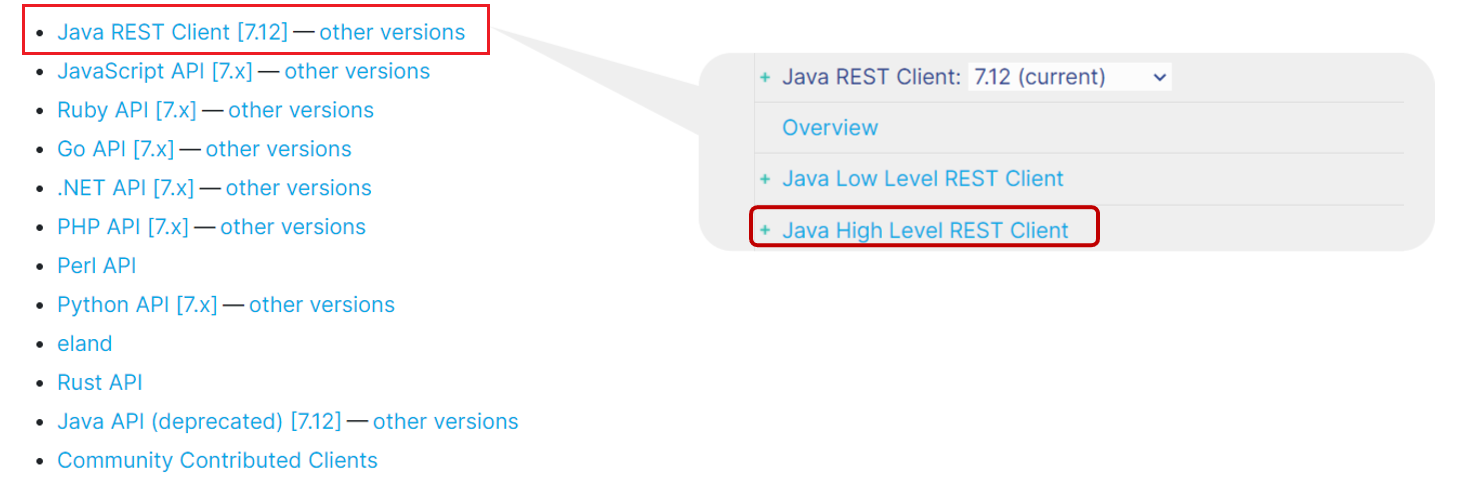
我们学习的是Java HighLevel Rest Client客户端API
导入Demo工程
导入数据
首先导入课前资料提供的数据库数据:

数据结构如下:
CREATE TABLE `tb_hotel` (
  `id` bigint(20) NOT NULL COMMENT '酒店id',
  `name` varchar(255) NOT NULL COMMENT '酒店名称;例:7天酒店',
  `address` varchar(255) NOT NULL COMMENT '酒店地址;例:航头路',
  `price` int(10) NOT NULL COMMENT '酒店价格;例:329',
  `score` int(2) NOT NULL COMMENT '酒店评分;例:45,就是4.5分',
  `brand` varchar(32) NOT NULL COMMENT '酒店品牌;例:如家',
  `city` varchar(32) NOT NULL COMMENT '所在城市;例:上海',
  `star_name` varchar(16) DEFAULT NULL COMMENT '酒店星级,从低到高分别是:1星到5星,1钻到5钻',
  `business` varchar(255) DEFAULT NULL COMMENT '商圈;例:虹桥',
  `latitude` varchar(32) NOT NULL COMMENT '纬度;例:31.2497',
  `longitude` varchar(32) NOT NULL COMMENT '经度;例:120.3925',
  `pic` varchar(255) DEFAULT NULL COMMENT '酒店图片;例:/img/1.jpg',
  PRIMARY KEY (`id`)
) ENGINE=InnoDB DEFAULT CHARSET=utf8mb4;
导入项目
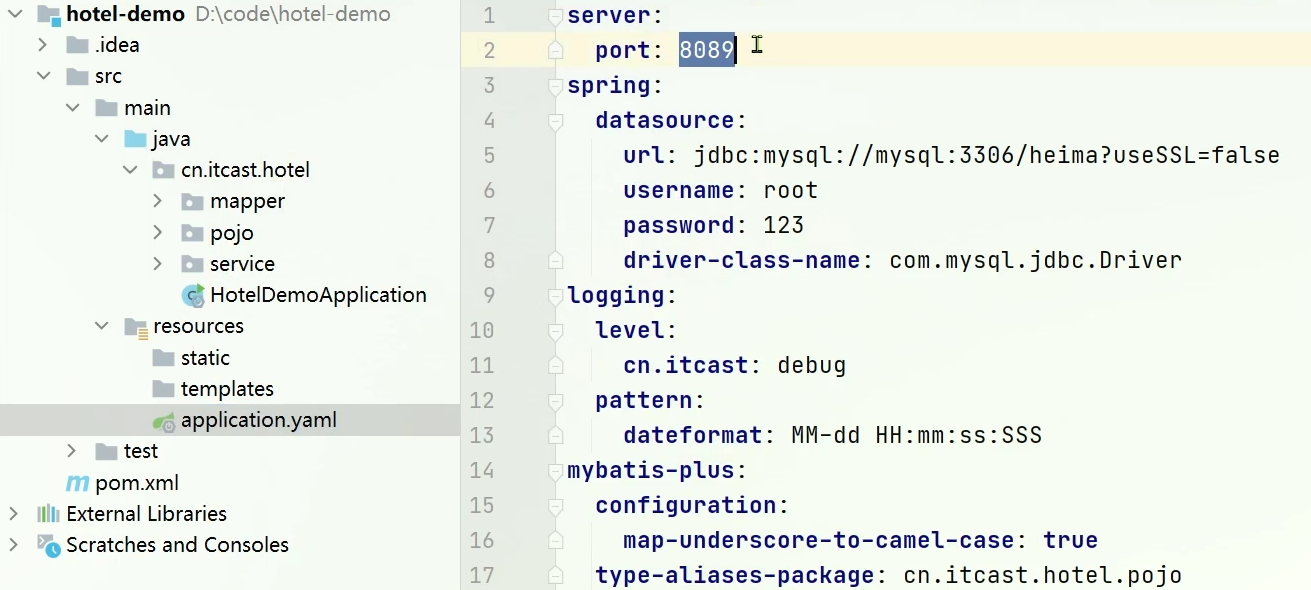
然后导入课前资料提供的项目:

项目结构如图:
mapping映射分析
创建索引库,最关键的是mapping映射,而mapping映射要考虑的信息包括:
- 字段名
- 字段数据类型
- 是否参与搜索
- 是否需要分词
- 如果分词,分词器是什么?
其中:
- 字段名、字段数据类型,可以参考数据表结构的名称和类型
- 是否参与搜索要分析业务来判断,例如图片地址,就无需参与搜索
- 是否分词呢要看内容,内容如果是一个整体就无需分词,反之则要分词
- 分词器,我们可以统一使用ik_max_word
来看下酒店数据的索引库结构:
PUT /hotel
{
  "mappings": {
    "properties": {
      "id": {
        "type": "keyword"
      },
      "name":{
        "type": "text",
        "analyzer": "ik_max_word",
        "copy_to": "all"
      },
      "address":{
        "type": "keyword",
        "index": false
      },
      "price":{
        "type": "integer"
      },
      "score":{
        "type": "integer"
      },
      "brand":{
        "type": "keyword",
        "copy_to": "all"
      },
      "city":{
        "type": "keyword",
        "copy_to": "all"
      },
      "starName":{
        "type": "keyword"
      },
      "business":{
        "type": "keyword"
      },
      "location":{
        "type": "geo_point"
      },
      "pic":{
        "type": "keyword",
        "index": false
      },
      "all":{
        "type": "text",
        "analyzer": "ik_max_word"
      }
    }
  }
}
几个特殊字段说明:
- location:地理坐标,里面包含精度、纬度
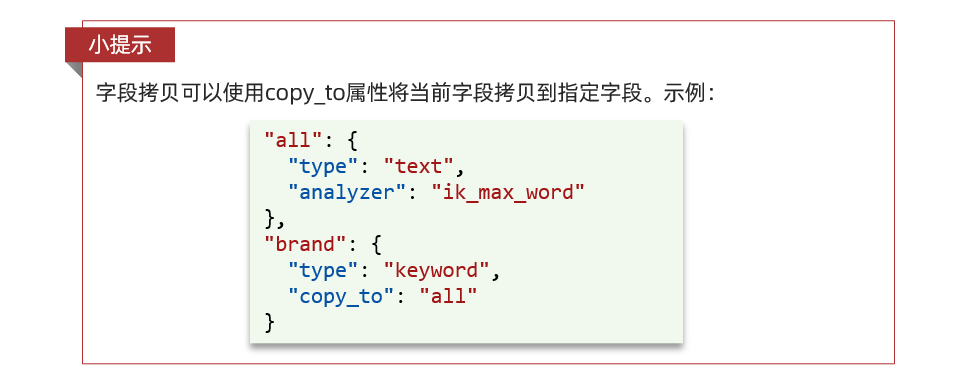
- all:一个组合字段,其目的是将多字段的值 利用copy_to合并,提供给用户搜索
地理坐标说明:

copy_to说明:
初始化RestClient
在elasticsearch提供的API中,与elasticsearch一切交互都封装在一个名为RestHighLevelClient的类中,必须先完成这个对象的初始化,建立与elasticsearch的连接。
分为三步:
-
引入es的RestHighLevelClient依赖:
<dependency>
    <groupId>org.elasticsearch.client</groupId>
    <artifactId>elasticsearch-rest-high-level-client</artifactId>
</dependency> -
因为SpringBoot默认的ES版本是7.6.2,所以我们需要覆盖默认的ES版本:
<properties>
    <java.version>1.8</java.version>
    <elasticsearch.version>7.12.1</elasticsearch.version>
</properties> -
初始化RestHighLevelClient:
初始化的代码如下:
RestHighLevelClient client = new RestHighLevelClient(RestClient.builder(
        HttpHost.create("http://192.168.150.101:9200")
));
这里为了单元测试方便,我们创建一个测试类HotelIndexTest,然后将初始化的代码编写在@BeforeEach方法中:
package cn.itcast.hotel;

import org.apache.http.HttpHost;
import org.elasticsearch.client.RestHighLevelClient;
import org.junit.jupiter.api.AfterEach;
import org.junit.jupiter.api.BeforeEach;
import org.junit.jupiter.api.Test;

import java.io.IOException;

public class HotelIndexTest {
    private RestHighLevelClient client;

    @BeforeEach
    void setUp() {
        this.client = new RestHighLevelClient(RestClient.builder(
                HttpHost.create("http://192.168.150.101:9200")
        ));
    }

    @AfterEach
    void tearDown() throws IOException {
        this.client.close();
    }
}
创建索引库
代码解读
创建索引库的API如下:
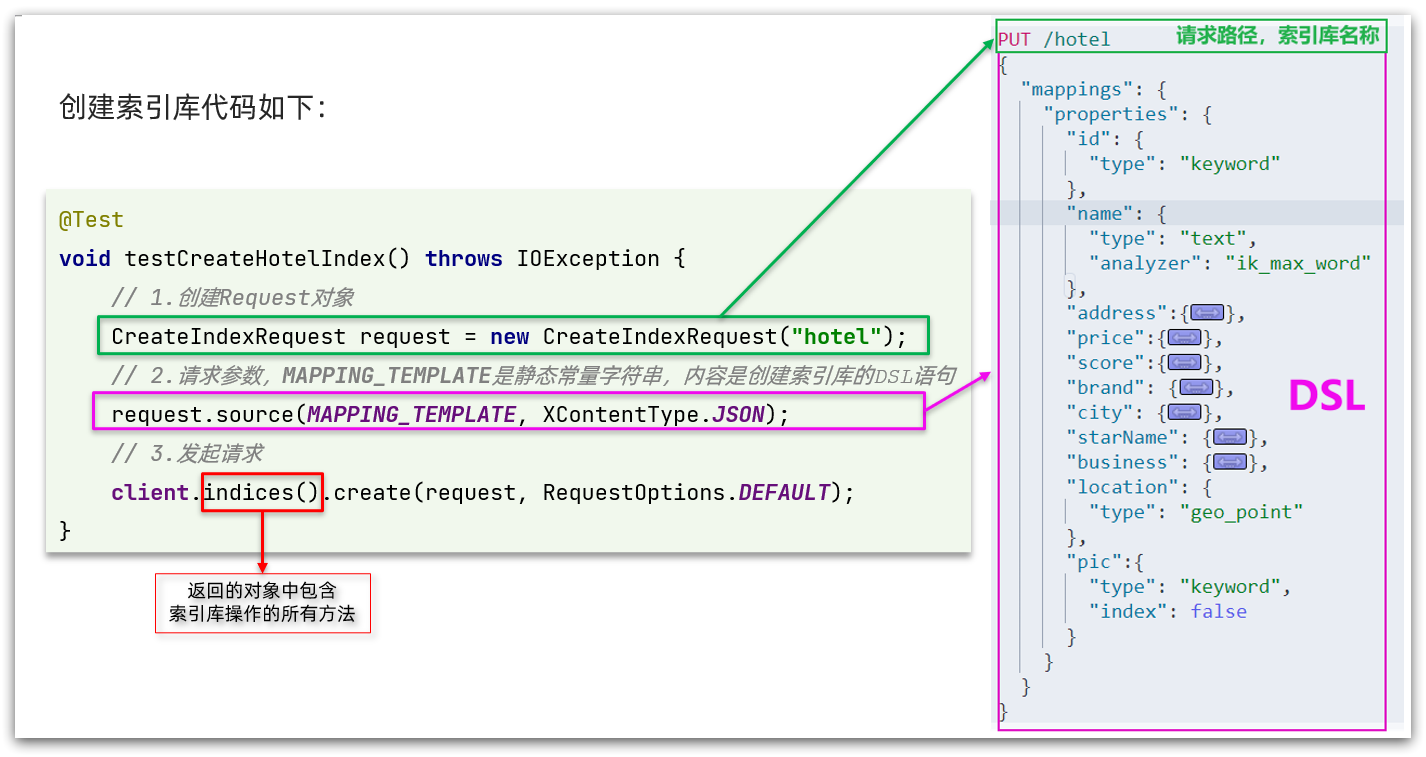
代码分为三步:
- 创建Request对象。因为是创建索引库的操作,因此Request是CreateIndexRequest。
- 添加请求参数,其实就是DSL的JSON参数部分。因为json字符串很长,这里是定义了静态字符串常MAPPING_TEMPLATE,让代码看起来更加优雅。
- 发送请求,client.indices()方法的返回值是IndicesClient类型,封装了所有与索引库操作有关的方法。
完整示例
在hotel-demo的cn.itcast.hotel.constants包下,创建一个类,定义mapping映射的JSON字符串常量:
package cn.itcast.hotel.constants;

public class HotelConstants {
    public static final String MAPPING_TEMPLATE = "{\n" +
            "  \"mappings\": {\n" +
            "    \"properties\": {\n" +
            "      \"id\": {\n" +
            "        \"type\": \"keyword\"\n" +
            "      },\n" +
            "      \"name\":{\n" +
            "        \"type\": \"text\",\n" +
            "        \"analyzer\": \"ik_max_word\",\n" +
            "        \"copy_to\": \"all\"\n" +
            "      },\n" +
            "      \"address\":{\n" +
            "        \"type\": \"keyword\",\n" +
            "        \"index\": false\n" +
            "      },\n" +
            "      \"price\":{\n" +
            "        \"type\": \"integer\"\n" +
            "      },\n" +
            "      \"score\":{\n" +
            "        \"type\": \"integer\"\n" +
            "      },\n" +
            "      \"brand\":{\n" +
            "        \"type\": \"keyword\",\n" +
            "        \"copy_to\": \"all\"\n" +
            "      },\n" +
            "      \"city\":{\n" +
            "        \"type\": \"keyword\",\n" +
            "        \"copy_to\": \"all\"\n" +
            "      },\n" +
            "      \"starName\":{\n" +
            "        \"type\": \"keyword\"\n" +
            "      },\n" +
            "      \"business\":{\n" +
            "        \"type\": \"keyword\"\n" +
            "      },\n" +
            "      \"location\":{\n" +
            "        \"type\": \"geo_point\"\n" +
            "      },\n" +
            "      \"pic\":{\n" +
            "        \"type\": \"keyword\",\n" +
            "        \"index\": false\n" +
            "      },\n" +
            "      \"all\":{\n" +
            "        \"type\": \"text\",\n" +
            "        \"analyzer\": \"ik_max_word\"\n" +
            "      }\n" +
            "    }\n" +
            "  }\n" +
            "}";
}
在hotel-demo中的HotelIndexTest测试类中,编写单元测试,实现创建索引:
@Test
void createHotelIndex() throws IOException {
    // 1.创建Request对象
    CreateIndexRequest request = new CreateIndexRequest("hotel");
    // 2.准备请求的参数:DSL语句
    request.source(MAPPING_TEMPLATE, XContentType.JSON);
    // 3.发送请求
    client.indices().create(request, RequestOptions.DEFAULT);
}
删除索引库
删除索引库的DSL语句非常简单:
DELETE /hotel
与创建索引库相比:
- 请求方式从PUT变为DELTE
- 请求路径不变
- 无请求参数
所以代码的差异,注意体现在Request对象上。依然是三步走:
- 创建Request对象。这次是DeleteIndexRequest对象
- 准备参数。这里是无参
- 发送请求。改用delete方法
在hotel-demo中的HotelIndexTest测试类中,编写单元测试,实现删除索引:
@Test
void testDeleteHotelIndex() throws IOException {
    // 1.创建Request对象
    DeleteIndexRequest request = new DeleteIndexRequest("hotel");
    // 2.发送请求
    client.indices().delete(request, RequestOptions.DEFAULT);
}
判断索引库是否存在
判断索引库是否存在,本质就是查询,对应的DSL是:
GET /hotel
因此与删除的Java代码流程是类似的。依然是三步走:
- 创建Request对象。这次是GetIndexRequest对象
- 准备参数。这里是无参
- 发送请求。改用exists方法
@Test
void testExistsHotelIndex() throws IOException {
    // 1.创建Request对象
    GetIndexRequest request = new GetIndexRequest("hotel");
    // 2.发送请求
    boolean exists = client.indices().exists(request, RequestOptions.DEFAULT);
    // 3.输出
    System.err.println(exists ? "索引库已经存在!" : "索引库不存在!");
}
总结
JavaRestClient操作elasticsearch的流程基本类似。核心是client.indices()方法来获取索引库的操作对象。
索引库操作的基本步骤:
- 初始化RestHighLevelClient
- 创建XxxIndexRequest。XXX是Create、Get、Delete
- 准备DSL( Create时需要,其它是无参)
- 发送请求。调用RestHighLevelClient#indices().xxx()方法,xxx是create、exists、delete